Road markings explained: yellow lines, red lines, kerb marks and zig-zags
The lines painted along the edge of a road tell you whether you may park, load or stop there. Yellow lines are about waiting, yellow marks on the kerb are about loading, red lines and zig-zags are about stopping at all, and white broken lines mark a parking bay.
Find the marking you saw below and follow the link for the full rule. For the signs that go with them, see parking signs explained.
Yellow lines
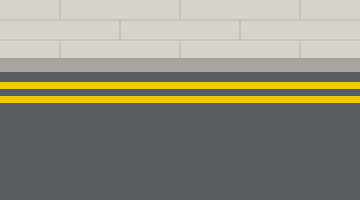
Double yellow lines
No waiting or parking at any time. They need no sign. You may still stop to let passengers in or out, and to load or unload where there is no loading ban. See double yellow lines.
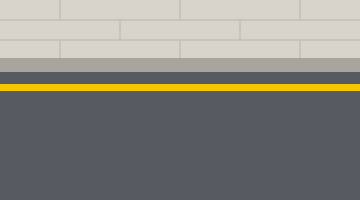
Single yellow line
No waiting or parking during the times on the nearby sign. In a controlled parking zone the times are on the zone's entry signs instead. See single yellow lines.
Yellow marks on the kerb
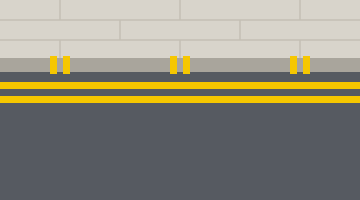
Two marks on the kerb
No loading or unloading at any time. The marks come in pairs along the kerb, beside a yellow line.
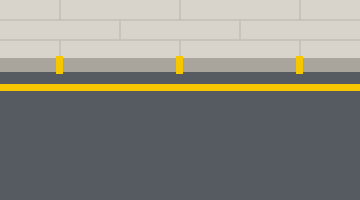
One mark on the kerb
No loading or unloading at the times on the nearby sign. See loading bays, taxi ranks and bus stops for what counts as loading.
Red lines
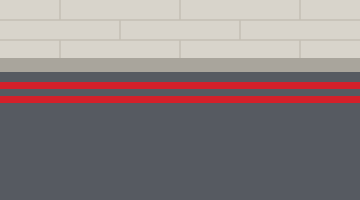
Double red lines
No stopping at any time, for any reason, except in a marked bay. That is stricter than a yellow line, which bans only waiting. See red routes.
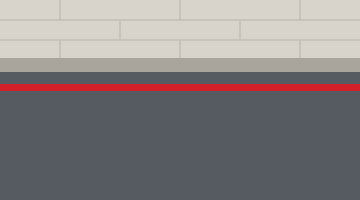
Single red line
No stopping at the times on the sign beside it.
Zig-zag lines
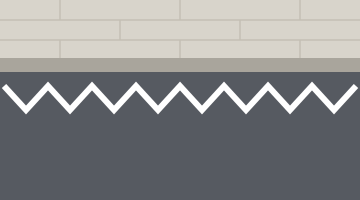
White zig-zags at a pedestrian crossing
No stopping, even for a moment to drop someone off. They apply all day, every day. See zig-zag lines.

Yellow zig-zags: school keep clear
No stopping at the times on the sign beside them, all year and not only in term time. The same marking, with "KEEP CLEAR" alone, is used outside hospitals and fire, police and ambulance stations.
Bays and bus stops
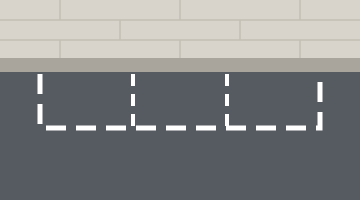
White broken lines: a parking bay
A place where parking is allowed, on the terms shown on the sign beside it. Park inside the markings: being outside them is a contravention of its own (code 24).
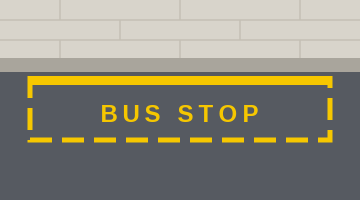
Yellow bus stop box
Other vehicles must not stop in the box during the times on the nearby sign, or at any time if the sign shows none. See urban clearways, which covers bus stop clearways.
About the pictures
The drawings on this page are our own simplified diagrams, not to scale. The markings themselves are set out in the Traffic Signs Regulations and General Directions 2016.
This page was checked against the law in England and Wales on 25 November 2026. It is general guidance, not legal advice: see the legal disclaimer.