Welcome to New Parking Laws UK
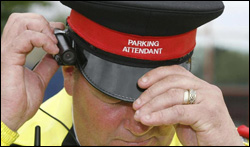
New Parking Laws UK explains the parking rules in England and Wales in plain English: what the lines, signs and bays mean, what a parking ticket costs, and how to challenge one. It also links to every council's parking pages.
Since 31 March 2008, councils have enforced most parking themselves under Part 6 of the Traffic Management Act 2004, known as civil parking enforcement. All 22 councils in Wales and almost every council in England now do so. A council parking ticket is a Penalty Charge Notice (PCN): a civil penalty, not a criminal fine, and you can challenge it and then appeal to an independent adjudicator. In the few areas without civil parking enforcement, the police still enforce parking as a criminal matter.
How civil parking enforcement works today:
- Civil enforcement officers issue PCNs by fixing them to the vehicle or handing them to the driver. A PCN can be posted to the registered keeper instead if the officer was prevented from issuing it, the vehicle was driven away first, or an approved camera recorded the contravention.
- There are two levels of penalty, higher and lower, depending on how serious the contravention is. Outside London a penalty is £70 or £60 at the higher level and £50 or £40 at the lower level; in London it is £160 or £140, and £110 or £90. See the amounts.
- Pay within 14 days and the penalty is halved (21 days for a PCN sent by post from camera evidence). Leave it unpaid and it can go up by 50%.
- The vehicle's owner, presumed to be the registered keeper, must pay, whoever was driving.
- In England, cameras can only be used for parking in council car parks, and on the street only on bus lanes, bus stop and bus stand clearways, school "keep clear" markings, red routes and mandatory cycle lanes that also have yellow lines.
- In England there is a 10-minute grace period when your paid or free time in a parking place runs out.
- Councils must not set targets for the number of PCNs or reward staff for issuing them, and clamping is mainly for persistent evaders.
- Challenging a PCN and appealing to the independent adjudicator are free.
Changes on the way:
- Pavement parking in England. Councils are to get powers to issue penalties for parking that obstructs the pavement (regulations planned by the end of 2026), and later to ban pavement parking across their areas (regulations planned no earlier than late 2027). See parking on pavements.
- Private car parks. A government code of practice for private parking companies was laid before Parliament on 20 October 2026. If Parliament does not object, it is expected to come into force in December 2026. See the government's Private Parking Code of Practice and our other guides to private parking.
Please use the topics menu to learn more about parking laws in England and Wales. We hope you find the information presented here useful.
This page was checked against the law in England and Wales on 22 October 2026. It is general guidance, not legal advice: see the legal disclaimer.