Bus and cycle lanes
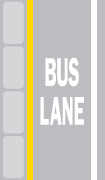
Bus lanes
Bus lanes keep buses moving. The signs show the times the lane operates and which other vehicles may use it. Cycles may use most bus lanes; taxis and motorcycles only where the signs show them. During the times shown you should not drive in a bus lane unless the signs allow your vehicle. Outside those times anyone can use it, and a lane with no times shown operates at all times.
You may enter a bus lane to stop, load or unload where this is not prohibited, but many bus lanes also have waiting or loading restrictions. Blue Badge holders have no right to drive in bus lanes during their hours of operation. Police, fire and ambulance vehicles being used for those purposes are exempt in London, and usually elsewhere under the local traffic order.
Councils enforce bus lanes with cameras, and the PCN is posted to the vehicle's registered keeper. Bus lane penalties are civil penalties, like parking penalties: they are halved if you pay within 21 days (14 days in London), and you can challenge and appeal them, although in London the grounds for challenging are narrower and formal representations are made against a later Enforcement Notice. How to fight a bus lane or bus gate penalty explains the arguments that win and lose. In London, the London boroughs and Transport for London enforce them; elsewhere, councils that have been given bus lane enforcement powers. A bus lane PCN uses contravention code 34. See PCN fine amounts for what it costs. Driving through a bus gate, a short stretch of road for buses only, is usually a moving traffic contravention instead: see moving traffic penalties.
Cycle lanes
The Highway Code says:
- Cycle lane marked with a solid white line (a mandatory cycle lane): you must not drive or park in it during its times of operation.
- Cycle lane marked with a broken white line (an advisory cycle lane): do not drive or park in it unless it is unavoidable.
- Any cycle lane: you must not park in it while waiting restrictions apply, such as yellow lines.
Cycle tracks are separated from traffic, for example by a kerb, and may be shared with pedestrians. You must not stop or park on a cycle track.
Parking wholly or partly on a cycle track or lane is a higher level contravention (code 49). In England, councils may use cameras to enforce parking in a mandatory cycle lane where there are also waiting or loading restrictions (yellow lines or kerb marks), and councils with moving traffic powers can use cameras to issue penalties for driving in a mandatory cycle lane (code 36).
Give way to cyclists in a cycle lane or on a cycle track when you turn across it, and remember that cyclists do not have to use cycle lanes or tracks.
Read more about camera enforcement.
This page was checked against the law in England and Wales on 22 October 2026. It is general guidance, not legal advice: see the legal disclaimer.